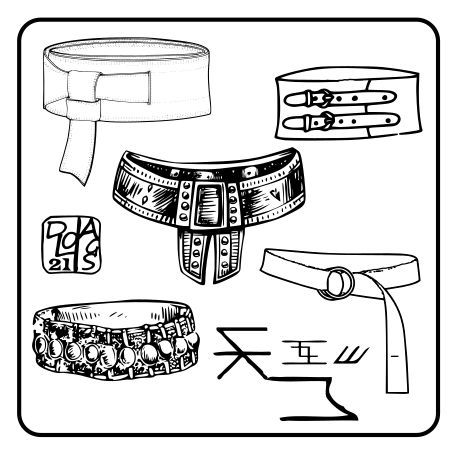
A belt is an item designed to wrap around the body, usually at the waist, to hold up a garment, adjust an outfit, or support certain movements. Made of leather, fabric, plant fibers, or more modern materials, it is one of the oldest and most universally used accessories in human history. Its primary function is practical: it connects different parts of a garment and establishes a link between the body and what covers it. Yet behind this apparent simplicity lies a wide variety of forms, techniques, and uses. In many societies, the belt quickly transcends its utilitarian function. It becomes a sign of social distinction, a marker of belonging, a symbol of authority, or a vehicle for aesthetic expression. The Japanese obi, the Persian kamarband, the Quebecois ceinture fléchée, and the Roman cingulum each reflect a unique way of connecting the individual to their community. The materials used, the patterns, the colors, or the way a belt is tied often reflect local craftsmanship, cultural traditions, and conceptions of the body specific to each society. | The belt also invites us to broaden its meaning, for beyond being a fashion accessory, it can be understood as a symbol of connection and unity. It links separate elements, maintaining a coherent whole and creating passages between different realities.Lire la suiteceinture
Vous pouvez compléter, modifier, améliorer cette indéfinition ou en proposer une autre au regard de vos savoirs, langages, pratiques, histoire… qu’elle soit formulée sur un mode scientifique, culturel, poétique… contact@21dialogues21.org